

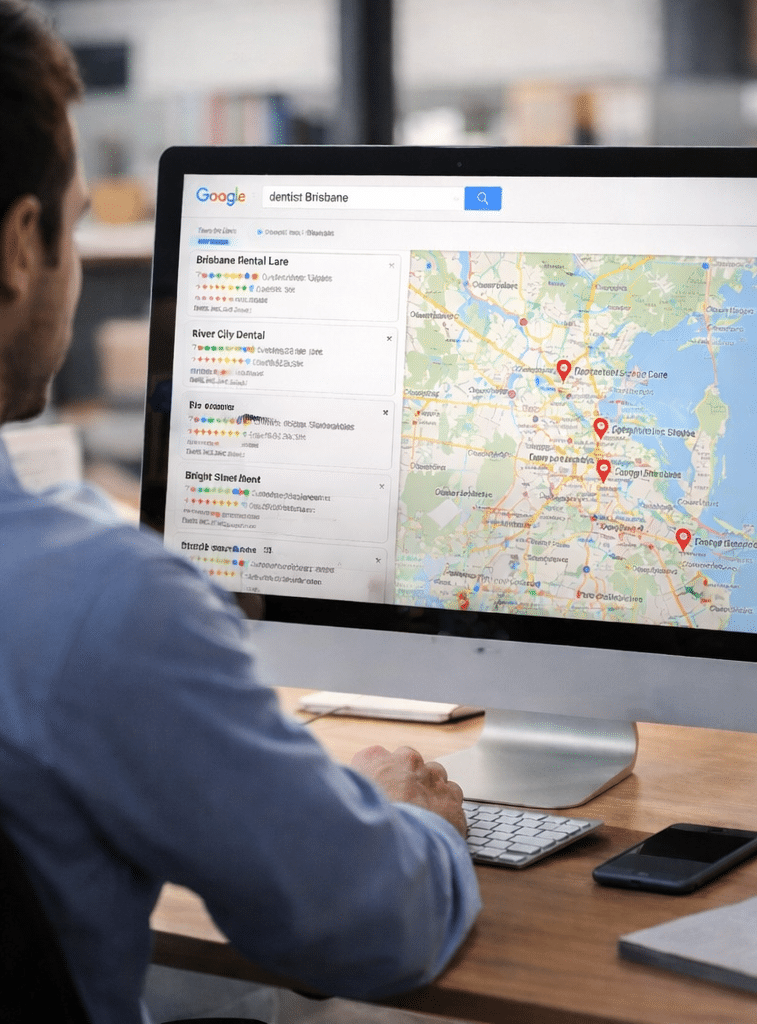
SEO google maps ranking Australia-Centric Guide to Local Search Success
seo google maps ranking
Table of Contents
-
Introduction
-
Featured Definition seo google maps ranking (Optimised Answer)
-
Why Google Maps Ranking Matters in Australia
-
Understanding Core Ranking Factors
-
Relevance, Distance & Prominence
-
Secondary Signals That Help
-
-
How Google Maps SEO Differs from Organic SEO
-
Step-by-Step Checklist to Improve Your Maps Ranking
-
Onshore vs Offshore SEO Local Advantage
-
People Also Ask (Australia Searches)
-
FAQs Expert Answers
-
Conclusion & Actionable Next Steps
Introduction
If you’re working to grow visibility and customers from search, seo google maps ranking is one of the most crucial optimisation strategies for Australian businesses that rely on local search demand. In everyday practice, Australians frequently use Google Maps to find services “near me” from cafés in Melbourne to plumbers in Perth or salons in Sydney meaning digital visibility directly influences real foot traffic, calls, and leads. In my experience, a systematic, quality-first approach to Google Maps SEO yields measurable improvements in local enquiries within weeks for many local businesses.

Featured Definition seo google maps ranking (Optimised Answer)
seo google maps ranking refers to how high a business appears in Google Maps and the Local Pack results when users search for local services. Ranking depends on relevance to the query, proximity to the searcher, and the business’s prominence online including reviews, consistency of information, and profile completeness.
Why Google Maps Ranking Matters in Australia
Australian consumers rely heavily on local search: whether searching for “best café near Adelaide CBD” or “dentist Parramatta,” Google Maps often surfaces results before traditional organic listings. Local search visibility yields:
-
Immediate high-intent traffic users searching local terms are often ready to act.
-
Mobile advantage Australians access local search mostly on smartphones.
-
Higher conversion rates local search users are more likely to call or visit businesses directly.
Because Google Maps listings appear above standard organic results for many local keywords, strong Maps ranking can significantly increase your discoverability compared to businesses that focus only on traditional SEO.
Understanding Core Ranking Factors
1. Relevance
Relevance measures how well your listing matches what a searcher is looking for. This is influenced by your Google Business Profile categories, services, and keyword usage in descriptions.
2. Distance (Proximity)
Google considers how close your physical location is to the searcher. Although you can’t change location, optimising for surrounding suburbs and suburbs in your business description and service area can improve visibility for broader searches.
3. Prominence
Prominence signals how well known your business is judged by reviews, online citations, business activity, and engagement. The more trusted and engaged your profile, the better your local ranking.
Secondary Signals That Help
-
Google Business Profile completeness and accuracy.
-
High-quality photos and regular posts.
-
Reviews volume, rating, and responses.
-
Consistent Name/Address/Phone (NAP) across directories.
How Google Maps SEO Differs from Organic SEO
While traditional SEO focuses on website content, backlinks, and technical optimisation, Google Maps SEO targets your Google Business Profile (GBP) and local signals. The Maps algorithm (often called “Local Pack SEO”) weighs local signals relevance, prominence, and proximity over conventional site factors like backlinks or page speed.
| Traditional SEO | Google Maps SEO |
|---|---|
| Website content & backlinks | Business profile signals & reviews |
| Page speed & meta tags | GBP completeness & engagement |
| National relevance | Local relevance & proximity |
| Organic rankings | Local Map Pack rankings |
Step-by-Step Checklist to Improve Your Maps Ranking
Use this actionable numbered checklist to strengthen your seo google maps ranking:
-
Claim and Verify Your Google Business Profile. Verification confirms ownership and enables full optimisation.
-
Complete Every Profile Field. Business name, categories, address, business hours, website, and services.
-
Use Relevant Local Keywords. Naturally include suburb and service keywords in your description.
-
Add High-Quality Visuals. Showcase your physical location, products, or team.
-
Collect and Respond to Reviews. Encourage satisfied customers to leave reviews and reply promptly to all feedback.
-
Ensure Consistent NAP Across the Web. Sync your details on directories and citation sources.
-
Embed Your Google Map on Your Website. Embedding the map on your contact page reinforces location signals to Google.
These steps form the foundation of a strong local SEO strategy that directly supports your maps ranking.
Onshore vs Offshore SEO Local Advantage
| Feature | Onshore SEO (Australia) | Offshore SEO |
|---|---|---|
| Local market understanding | High | Medium |
| Rapid reaction to local trends | Faster | Slower |
| Local keyword insight | Strong | Varies |
| Community and review engagement | Easier | Harder |
| Cost for local support | Higher | Often lower |
| Onshore SEO typically offers better local context and responsiveness for Australia-centric optimization. |
People Also Ask (Australia Searches)
Q: How long before my Google Maps ranking improves?
Local SEO improvements can appear within weeks, but meaningful progress often takes consistent optimization over several months, depending on competition.
Q: Will reviews help my Google Maps ranking?
Yes — higher volume and quality reviews increase prominence and trust, improving your chances of ranking higher.
Q: Can small Aussie businesses outrank larger competitors locally?
Absolutely. Strong local engagement, reviews, and complete profiles can outweigh size in local search results.
Q: Does Google use my website for Maps ranking?
Your website reinforces your local signals, but the core influence for maps comes from your GBP and local engagement.
FAQs Expert Answers
1. What suburbs should I target for local search?
Analyse where your customers are located and include suburb-level terms and service pages in your content. Suburb-specific signals help Google match your business to those local queries.
2. Should I create content on my website for local keywords?
Yes local content supports your GBP by reinforcing location relevance and helping Google associate your site with local search terms.
3. How important are citations outside Google?
Consistent listings on reputable Australian directories help build trust and can improve prominence in local search.
4. Is there a quick way to track my Maps ranking?
Use tools like Google Business Profile Insights and local search tracking tools to monitor how often your listing appears in relevant searches and estimate ranking progress.
5. Can I pay to improve Google Maps ranking?
Paid ads can increase visibility temporarily, but they don’t directly improve organic ranking only optimisation of local signals will lift your position in the Local Pack.
Conclusion & Actionable Next Steps
Mastering seo google maps ranking in Australia requires focusing on relevance, prominence, and local signals that match how Aussies search for nearby services. Start with a complete and optimised Google Business Profile, encourage real reviews, and ensure your business information is consistent everywhere online. For a tailored local SEO strategy built specifically to boost your visibility in targeted suburbs, consider partnering with a local expert and explore resources on RevGenX’s local SEO services to strengthen your presence where it matters most.