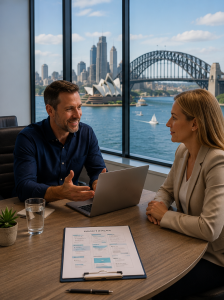


If you are searching for udemy web design in Australia, you are probably trying to learn how websites are planned, designed, built, and improved without wasting money or time. From my experience working with business owners, founders, and marketing teams, Udemy can be a useful starting point. However, it works best when you understand what a course can teach, what it cannot replace, and how web design decisions affect real business outcomes.
Udemy lists web design courses covering responsive design, WordPress, HTML, CSS, and user-friendly website creation, so it can help beginners build baseline knowledge. However, Australian businesses also need to consider privacy, cyber security, accessibility, hosting, content, conversion strategy, and ongoing maintenance. According to the Office of the Australian Information Commissioner, the Australian Privacy Principles govern standards, rights, and obligations around personal information handling. Australian Government business guidance also highlights cyber security as part of protecting business technology, data, and customer information.
Table of Contents
- What Is Udemy Web Design?
- Why Australians Search for Udemy Web Design
- What You Can Learn from Udemy Web Design Courses
- What Udemy Web Design Courses Usually Do Not Cover
- Udemy Web Design vs Hiring a Professional Web Design Team
- Australia-Specific Website Considerations
- How to Choose the Right Udemy Web Design Course
- A Practical Website Onboarding Checklist
- When DIY Learning Is Enough
- When to Work with a Web Design Agency
- People Also Ask
- Expert Q&A
- Conclusion
What Is Udemy Web Design?
Udemy web design refers to online courses on Udemy that teach website layout, responsive design, HTML, CSS, WordPress, UX basics, and visual design. For Australians, it can be a low-cost way to learn website fundamentals, but business-ready websites usually need strategy, compliance checks, security, testing, and ongoing support.
What Is Udemy Web Design?
Udemy web design is not one single course. Instead, it describes the wide range of web design courses available on Udemy. These courses may teach visual layout, coding basics, WordPress, landing pages, responsive design, ecommerce design, design tools, or portfolio projects.
For many Australians, this is appealing because learning online feels flexible. You can study after work, pause lessons, replay technical steps, and compare different instructors. As a result, udemy web design can suit students, freelancers, startup founders, marketing assistants, and small business owners who want to understand how websites work.
However, learning web design and launching a business website are different tasks. A course may teach you how to build a page. It may not teach you how to turn that page into a lead generation asset for a local service business in Sydney, Melbourne, Brisbane, Perth, Adelaide, Canberra, Hobart, or regional Australia.
That difference matters. A website is not only a design file or a set of pages. It is a digital business system. It needs clear messaging, fast loading, mobile usability, search visibility, analytics, contact pathways, trust signals, and security practices.
Therefore, udemy web design is best viewed as a learning pathway, not a complete replacement for professional web design strategy.
Why Australians Search for Udemy Web Design

Australians search for udemy web design for several practical reasons.
First, many people want to avoid paying for a website before they understand what is involved. This is reasonable. If you understand basic design terms, you can brief a developer more clearly and avoid vague requests such as “make it modern”.
Second, small business owners often need to move quickly. A sole trader, consultant, tradie, allied health provider, ecommerce seller, or local service company may need a website before they have the budget for a full custom build. In this case, a course can help them create a basic version.
Third, career changers use udemy web design to test whether they enjoy digital work. Before investing in a diploma, bootcamp, or degree, a short course can help them understand HTML, CSS, page structure, colour, typography, and UX.
Finally, marketing teams use online courses to improve collaboration. When a marketer understands web design, they can write better page briefs, review layouts more effectively, and communicate with designers in practical terms.
What You Can Learn from Udemy Web Design Courses
A good udemy web design course can teach useful foundations. These foundations help even when you later hire a professional team.
1. Website Structure
You may learn how home pages, service pages, about pages, contact pages, landing pages, and blog posts work together. This is important because visitors need a clear path.
For example, a visitor may land on a blog post, compare your services, read a case study, and then submit an enquiry. Good structure supports this journey.
2. Responsive Design
Responsive design means a website adapts to different screen sizes. This includes mobile phones, tablets, laptops, and desktop monitors.
For Australian businesses, mobile experience is especially important because many people search while commuting, travelling, or comparing providers on the go. If your page looks broken on mobile, users may leave before they understand your offer.
3. HTML and CSS Basics
Many udemy web design courses cover HTML and CSS. HTML controls the structure of a web page. CSS controls the presentation, such as spacing, colours, typography, and layout.
You do not need to become a full developer to benefit from this knowledge. Even a basic understanding helps you make better decisions when reviewing templates, landing pages, or developer work.
4. WordPress and Page Builders
Some courses focus on WordPress, Elementor, or other page-building tools. This can be useful for small businesses that need to update content without asking a developer for every small change.
However, page builders can become messy if they are used without a plan. Too many plugins, oversized images, and poorly configured themes can slow a website down.
5. Visual Design Principles
A course may explain typography, colour contrast, spacing, alignment, hierarchy, and imagery. These principles make a site easier to scan.
For example, strong hierarchy helps visitors notice the main message first. Good spacing reduces visual clutter. Clear buttons guide people towards action.
6. UX Basics
UX stands for user experience. It focuses on how people interact with a website.
A simple UX lesson might teach you to reduce form fields, make navigation obvious, and avoid confusing page layouts. These changes can improve enquiries because they reduce friction.
What Udemy Web Design Courses Usually Do Not Cover
Although udemy web design courses can be helpful, they often have limits.
They May Not Reflect Your Business Model
A course project is usually generic. It may show how to build a portfolio, restaurant website, agency page, or landing page. However, your business may need industry-specific strategy.
For instance, an NDIS provider, accountant, ecommerce store, construction company, SaaS startup, or local medical clinic will each need different content, trust signals, forms, and customer journeys.
They May Not Cover Australian Admin Requirements
Australian businesses may need to think about ABN details, business name consistency, privacy policy content, cookie notices, terms, refund information, accessibility, and customer data handling. These are administrative and operational considerations, not legal advice.
For privacy, the OAIC explains that the Australian Privacy Principles cover how personal information is collected, used, disclosed, governed, and accessed. The Privacy Act applies to Australian Government agencies and many organisations, including organisations with annual turnover over $3 million and some smaller organisations in specific categories.
They May Not Teach Conversion Strategy
A beautiful website is not always an effective website. Conversion strategy asks practical questions:
What does the visitor need to know first?
What objections stop them from enquiring?
Which proof points build trust?
What should the call to action say?
How many steps are needed before a lead is captured?
Many beginner courses focus on layout. However, layout alone does not guarantee leads.
They May Not Handle Technical SEO
Search engine optimisation is more than adding keywords. Technical SEO can include site architecture, crawlability, metadata, image optimisation, internal links, schema markup, redirects, Core Web Vitals, and indexation.
A udemy web design course may introduce SEO, but it may not give you a complete technical process for a live Australian business website.
They May Not Cover Security Deeply
Security is often treated as a final step. In practice, it should be considered from the beginning.
The Australian Cyber Security Centre provides cyber security guidance for small and medium businesses, and business.gov.au describes cyber security as protecting technology, data, and information from accidental or illegal access, corruption, theft, and damage.
For a business website, this may include strong passwords, multi-factor authentication, plugin updates, backups, SSL certificates, secure hosting, spam protection, and access control.
Udemy Web Design vs Hiring a Professional Web Design Team
The right choice depends on your budget, risk, timeline, and website goals.
| Option | Best For | Main Benefits | Main Limits | Australia Context |
| Udemy web design course | Beginners, students, early-stage founders | Low cost, flexible, self-paced | Requires time, trial and error, limited business strategy | Useful for learning terms before hiring |
| DIY template website | Sole traders, testing an idea | Fast launch, affordable | Can look generic, may have SEO and speed issues | Good for simple validation |
| Freelancer | Small projects or specific tasks | Personal service, flexible scope | Quality varies, may depend on one person | Check portfolio, ABN, process, support |
| Local agency | Growth-focused businesses | Strategy, design, development, SEO, support | Higher upfront cost | Better for lead generation, ecommerce, complex builds |
| Offshore team | Cost-sensitive builds | Lower hourly rates | Communication, timezone, quality control risks | Needs strong brief and project management |
From my experience, the strongest results often come from combining learning and expert execution. For example, you might use udemy web design to understand basic concepts, then work with a professional team to build the final website.
This approach helps you ask smarter questions. It also helps you review proposals more confidently.
Australia-Specific Website Considerations
A website for an Australian audience should feel relevant, trustworthy, and easy to use.
Local Trust Signals
Australian users often look for signs that a business is real and reachable. These may include:
- Australian phone number
- City, suburb, or service area
- ABN or business registration details where appropriate
- Local testimonials
- Australian spelling and terminology
- Clear pricing signals, even if exact prices vary
- Local case studies
- Transparent contact options
For example, “enquire” may feel more natural than “inquire” in Australian English. Similarly, prices should be marked as AUD where relevant.
Privacy and Customer Data
If your website collects names, emails, phone numbers, addresses, health information, booking details, or payment information, privacy should be considered early.
This does not mean every small website needs complex legal documents. However, it does mean you should understand what data you collect, why you collect it, where it goes, who can access it, and how long it is kept.
For formal privacy obligations, use official guidance or speak with a qualified adviser. Treat privacy policy setup as an administrative support task that should be reviewed by an appropriate professional.
Cyber Security
A small business website can still be targeted. Therefore, security should not wait until after launch.
At a practical level, Australian businesses should consider:
- Multi-factor authentication for admin accounts
- Regular software updates
- Secure hosting
- SSL certificates
- Strong password rules
- Backups
- Limited admin access
- Spam filtering
- Malware monitoring
- Staff awareness
The Australian Cyber Security Centre’s small business guidance includes basic security measures such as turning on multi-factor authentication and updating software.
Accessibility
Accessibility means making your website easier for people with different abilities, devices, and browsing contexts. This can include readable text, keyboard navigation, colour contrast, alt text, captions, descriptive buttons, and clear forms.
Even when accessibility is not treated as a formal compliance project, it improves usability. In addition, it helps more Australians interact with your business online.
Content That Matches Local Search Intent
A course may teach you how to design a generic page. However, ranking in Australia also requires content that matches local intent.
For example, someone searching “web design cost Australia” may want pricing ranges. Someone searching “web design agency Melbourne” may want local service options. Someone searching “udemy web design” may want to know whether learning through Udemy is enough or whether they need professional help.
Therefore, your content should answer the real question behind the keyword.
How to Choose the Right Udemy Web Design Course
Not all courses are equal. Use a structured filter before enrolling.
Check the Course Outcome
Before choosing a udemy web design course, ask what you will be able to do by the end.
A useful outcome might be:
- Build a responsive landing page
- Understand HTML and CSS basics
- Design a WordPress website
- Create a portfolio project
- Improve UI design skills
- Understand UX principles
- Build a simple ecommerce layout
Avoid choosing only because a course is popular. Popularity can help, but fit matters more.
Review the Curriculum
Look for practical lessons on layout, mobile design, typography, navigation, forms, accessibility, performance, and project planning.
If the course only teaches visual effects, it may not help you build a business-ready website.
Check the Update Date
Web design changes quickly. Tools, browsers, WordPress versions, privacy expectations, and SEO practices evolve.
Therefore, choose courses that are recently updated or clearly maintained. A course that was excellent years ago may still be useful for fundamentals, but tool-specific lessons can become outdated.
Read Reviews Carefully
Do not only look at star ratings. Read reviews to see whether learners like you found the course useful.
For example, a beginner should look for comments from other beginners. A business owner should look for practical project outcomes.
Watch Preview Lessons
Most course platforms provide preview lessons. Use them to judge teaching style.
Ask yourself:
Does the instructor explain the “why”?
Is the pace clear?
Are examples practical?
Is the audio easy to follow?
Does the course show real website decisions?
Avoid Tool-Only Thinking
A tool is not a strategy. Learning Figma, WordPress, Webflow, Elementor, or Shopify can help, but strong web design still depends on message clarity, user flow, content, technical setup, and testing.
A Practical Website Onboarding Checklist
Use this checklist before starting a udemy web design course, a DIY build, or a professional website project.
- Define the website goal
Decide whether the site should generate leads, sell products, book appointments, educate visitors, or support brand credibility. - Clarify the target audience
Write down who the website is for, where they are in Australia, what they need, and what concerns they have. - Map the key pages
Plan the home page, service pages, about page, contact page, blog, case studies, FAQs, and landing pages. - Collect brand assets
Gather your logo, colours, fonts, photos, icons, brand voice notes, and any existing marketing material. - Prepare content before design
Draft headings, service descriptions, proof points, calls to action, and FAQs before designing layouts. - List trust signals
Include testimonials, reviews, qualifications, industry memberships, project examples, guarantees where appropriate, and local proof. - Plan forms and data collection
Decide what information forms will collect and how that information will be stored and managed. - Check privacy and admin needs
Prepare privacy policy details, terms, refund information, ABN references, and other administrative content for review. - Plan SEO basics
Choose page keywords, metadata, internal links, image names, headings, and URL structure. - Test before launch
Review mobile layout, form submissions, page speed, spelling, links, tracking, security, and backups.
This checklist is simple, but it prevents many common website problems.
When DIY Learning Is Enough
Udemy web design may be enough when the risk is low and the goal is simple.
For example, DIY learning may suit:
- A personal portfolio
- A student project
- A basic brochure website
- An early startup concept
- A hobby website
- A simple landing page for testing demand
- A founder who wants to understand web design before hiring
In these cases, the main goal is learning or validation. A perfect result is not required.
However, you should still be careful with customer data, payment tools, health information, or regulated industries. Once a website collects sensitive information or supports real revenue, mistakes become more expensive.
When to Work with a Web Design Agency
A professional team becomes more valuable when your website needs to support business growth.
You should consider expert help when:
- You rely on leads from Google
- You sell products online
- Your current website loads slowly
- You need custom integrations
- You need booking, CRM, or payment workflows
- You have multiple services or locations
- You need stronger SEO structure
- You need conversion-focused landing pages
- Your brand needs to look more credible
- You do not have time to test everything yourself
A web design agency can also help translate business goals into website decisions. For example, the team may recommend a simpler menu, stronger calls to action, clearer service pages, better page speed, or a more scalable content structure.
If you want strategic help with planning, designing, and improving a business website, explore RevGenX’s conversion-focused web design and development support.
How Udemy Web Design Fits into a Professional Website Project
Udemy web design can still be useful even when you hire professionals.
For example, before a project starts, you can use a course to learn basic terms. This helps you understand wireframes, responsive breakpoints, design systems, CMS editing, hosting, and SEO.
During the project, your learning helps you give clearer feedback. Instead of saying “make it pop”, you might say “the hierarchy is unclear” or “the primary call to action needs more contrast”.
After launch, you can use your knowledge to manage simple updates. This reduces support delays and helps your team keep content fresh.
Therefore, learning does not compete with professional help. In many cases, it improves the collaboration.
Common Mistakes Australians Make with Udemy Web Design
Choosing a Course Before Defining the Goal
Many people start with the tool. They search for WordPress, Figma, Webflow, or CSS before deciding what the site must achieve.
Instead, start with the business goal. Then choose the course that supports that goal.
Copying a Demo Website Too Closely
Course projects are examples. They are not tailored strategies.
If you copy a demo layout without adapting it, your website may not reflect your market, audience, services, or trust signals.
Ignoring Mobile Testing
A design may look great on a laptop but fail on a phone. Always test navigation, forms, buttons, and images on mobile.
Using Too Many Plugins
This is common with WordPress learners. Plugins can add features quickly, but too many plugins may slow the site or create maintenance risks.
Writing Content After the Design
Design should support content. If you design first and write later, you may force important messages into the wrong layout.
Forgetting Maintenance
A website is not finished after launch. It needs updates, backups, analytics review, content improvements, and security checks.
A Balanced View: Is Udemy Web Design Worth It?
Udemy web design can be worth it if your expectations are realistic.
It is useful for learning fundamentals. It can help you understand how web pages are structured, how responsive design works, and what makes a page easier to use. It can also help you save money on small updates because you will understand basic website editing.
However, it is not a guaranteed path to a high-performing business website. Courses cannot fully replace strategy, experience, testing, industry context, or technical review.
The best way to use udemy web design is to treat it as education. Learn the concepts. Build small practice projects. Then decide whether your business website needs professional planning and execution.
People Also Ask
Is Udemy web design good for beginners in Australia?
Yes, udemy web design can be good for beginners because many courses start with basic concepts such as HTML, CSS, responsive layouts, and WordPress. However, beginners should choose courses with recent updates, clear projects, and practical examples.
Can I build a business website after taking a Udemy web design course?
You may be able to build a simple business website after taking a course, especially if your needs are basic. However, a website that needs SEO, lead generation, ecommerce, integrations, privacy planning, and security usually needs more expertise.
Are Udemy web design certificates recognised in Australia?
Udemy certificates can show that you completed a course, but they are not the same as accredited Australian qualifications. They are best used as evidence of self-learning, portfolio development, or professional development.
How much does it cost to learn web design on Udemy?
Udemy course prices vary due to promotions, course length, and instructor pricing. Treat the course fee as only one cost because you may also need hosting, a domain name, templates, plugins, stock images, or professional support.
Should I learn web design or hire someone?
Learn web design if you want basic control, better digital knowledge, or a small DIY website. Hire a professional if your website affects revenue, reputation, customer data, search visibility, or operational workflows.
Expert Q&A
1. What skills should I learn first in udemy web design?
Start with layout, typography, colour, responsive design, HTML basics, CSS basics, and user experience. After that, learn a CMS such as WordPress if you want to manage content. This order helps you understand principles before tools.
2. Is WordPress better than coding from scratch for Australian small businesses?
WordPress is often practical for small businesses because it allows easier content updates and has a large plugin ecosystem. However, custom coding may be better for performance, unique workflows, or complex products. The right choice depends on the site’s goals, budget, and maintenance plan.
3. How do I know whether my Udemy-built website is good enough to launch?
A basic launch-ready website should work well on mobile, load quickly, explain your offer clearly, include contact options, have working forms, use secure hosting, and include essential admin pages. Also test links, spelling, analytics, backups, and search indexing before publishing.
4. Can udemy web design help with SEO?
Yes, it can help with SEO basics such as headings, page structure, mobile usability, and metadata. However, serious SEO also requires keyword research, technical setup, content planning, internal linking, analytics, and ongoing improvements.
5. What should Australian businesses do after finishing a Udemy web design course?
Build a small practice site, review Australian business and privacy guidance, test your site on real devices, and document what you still cannot confidently handle. Then decide whether to DIY, hire a freelancer, or work with an agency for strategy, development, SEO, and support.
Conclusion
Udemy web design is a valuable starting point for Australians who want to understand how websites work. It can teach the basics of layout, responsive design, HTML, CSS, WordPress, UX, and visual hierarchy. As a result, it can help you become a better website owner, marketer, freelancer, or founder.
However, a business website needs more than course knowledge. It needs clear strategy, local audience understanding, privacy awareness, cyber security, SEO structure, conversion planning, performance checks, and ongoing maintenance.
Therefore, use udemy web design as a learning tool, not a complete business solution. Learn the fundamentals, practise with small projects, and then bring in expert help when your website must support real growth, leads, ecommerce, or customer trust.
For Australian businesses that want a practical, search-ready, and conversion-focused website, the strongest path is often a blend of education and professional execution.